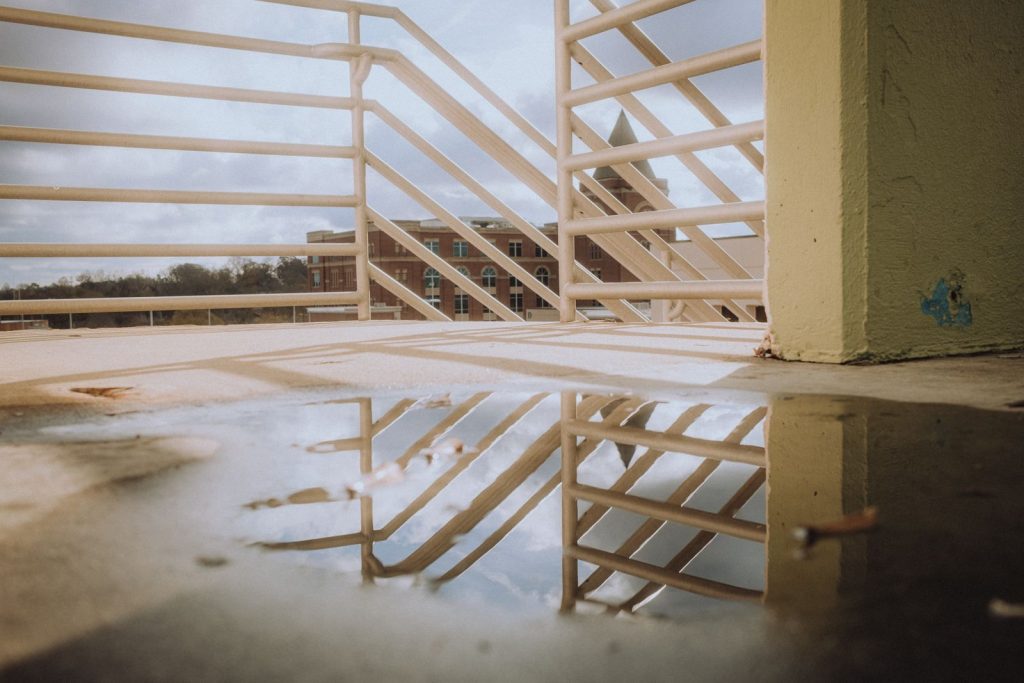
Ponding water is exactly what it sounds like: rainwater that sits on your flat roof instead of draining away. Every flat roof holds some water right after a storm — that’s normal. Ponding is what happens when it stays. The National Roofing Contractors Association (NRCA) defines ponding water as water that remains on the roof 48 hours or more after rainfall ends, under conditions favorable for drying. That 48-hour line is the difference between a puddle and a problem.
Why the fuss over standing water? Because a flat roof is a system designed to shed water, not store it. When water lingers, it works on every part of that system — membrane, seams, flashings, structure — around the clock. Here’s what causes ponding, why it matters, and what actually fixes it.
Why ponding happens
Flat roofs aren’t flat. They’re built with a slight slope — toward interior drains, scuppers, or the roof edge — so water has somewhere to go. Ponding means something along that path has failed:
- Clogged drainage (the most common cause). Leaves, cottonwood fluff, gravel wash, and sediment block drains and scuppers. During Rio Rancho’s monsoon season, a single storm can dump enough debris to choke a scupper that was draining fine in June.
- Low spots in the structure. Decks can deflect under load or settle over time, creating shallow bowls that hold water.
- Compressed insulation. Heavy rooftop equipment — or foot traffic in the wrong spot — can compress insulation boards, forming dams around the compressed area.
- Design shortfalls. Some older roofs simply don’t have enough slope, or the drains are spaced too far apart for the roof area they serve.
Why ponding is a problem
Weight
Water is heavy — just over five pounds per square foot for every inch of depth. A ponded area a few inches deep over a few hundred square feet adds thousands of pounds of load the structure wasn’t designed to carry continuously. Worse, weight causes deflection: the deck sags slightly under the water, the sag holds more water, and the water causes more sag. Engineers call this progressive deflection, and it’s how a minor low spot becomes a major one.
It never lets the membrane rest
Membranes are built to get wet and dry out in cycles. Ponding keeps the surface constantly wet, which accelerates aging and keeps every seam, flashing edge, and penetration detail submerged and under test — permanently. Standing water also collects dirt and grit, turning the pond into an abrasive slurry that wears the membrane whenever anyone walks through it, and it can support algae and vegetation growth that roots into some membrane types.
It can affect your warranty
Most single-ply manufacturers’ warranty documents require positive roof drainage and define ponding water on the same 48-hour basis the NRCA uses. Persistent ponding can put warranty coverage at risk — another reason to treat the 48-hour mark as a real deadline, not a suggestion.
How to tell whether your ponding is a problem
Do the 48-hour test: look at the roof within two days after rain ends, in dry weather. Water that’s gone means drainage is working as designed. Water that’s still there is ponding — and what you do next depends on the details:
- Where it ponds. Water sitting right around a drain usually means the drain is clogged — the cheapest fix there is. Water ponding in the middle of the field, far from any drain, points to slope or structural issues.
- How deep and how wide. A shallow “birdbath” is worth monitoring; several inches deep over a large area deserves a professional look soon.
- Whether it’s getting worse. Photograph the pond after storms, from the same spot, with something for scale. A growing pond means progressive deflection — don’t wait on that one.
- Whether you have overflow drainage. Building codes generally require secondary (overflow) drains or scuppers where the roof edge rises above the roof surface — outlets that only engage if the primary drains are overwhelmed. If your roof lacks them, a single clogged drain can turn a storm into a structural load event.
What actually fixes ponding
Start with the drains
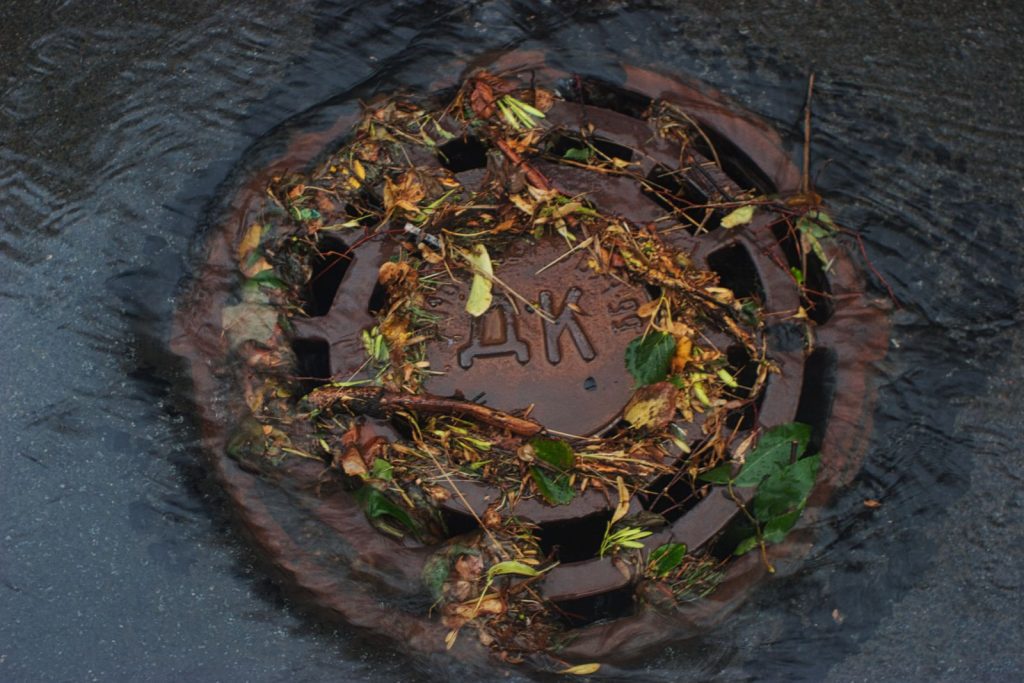
Clear every drain, scupper, and gutter of debris, and make sure strainer baskets are seated. This alone resolves a surprising share of ponding complaints — which is why drain clearing is a standing item in our simple flat roof maintenance checks. If ponding persists after the drainage path is fully clear, the problem is slope or structure, not debris.
Rebuild the slope
Real slope fixes include tapered insulation (rigid boards cut to create fall toward drains), crickets or saddles that divert water around rooftop equipment, and adding drains or scuppers where the roof area per drain is too large. These are professional jobs — they change how the whole roof sheds water — but they’re the only fixes that address the cause rather than the symptom.
What doesn’t fix ponding: coatings
This one matters because it’s a common misconception. A roof coating seals and protects the membrane surface, but it doesn’t create slope — water will stand on a coated low spot just as happily as on an uncoated one. Coatings are a legitimate way to extend the life of a sound, well-draining roof (see our roof coatings and restoration service), but they are not a drainage solution. Anyone who offers you a coating as the fix for ponding is selling you the wrong product.
When ponding means something bigger
Get a professional assessment if the pond is deep, growing, or persists despite clear drains — or if the roof feels soft or visibly sags near the ponded area. Those are signs of saturated insulation or structural deflection, and both need eyes-on evaluation, not guesswork. A proper assessment maps the low spots, checks the insulation beneath them for trapped moisture, and lays out options in order of cost — the same decision our repair-versus-replacement guide helps you think through.
A little standing water the day after a storm is just weather. Water that’s still there two days later is your roof telling you something. Listen early, and the fix is usually simple — clear a drain, adjust a scupper, plan a tapered repair. Wait, and water will keep working on the problem for you. If you’d like a straight answer about ponding on your roof, request a roof assessment or call (505) 578-4300.