A water stain on your ceiling or a slow drip during a storm has a way of landing on the to-do list instead of at the top of it. The roof isn’t caving in, the bucket is working, and life is busy. With a flat roof, though, that delay is riskier than it looks. By the time water shows up inside, it has usually been traveling through your roof assembly far longer than you’ve known about it — and every week you wait gives it more territory to damage.
Flat roofs don’t leak like pitched roofs. On a steep slope, water runs downhill and usually appears near the breach. On a low-slope roof, water that gets past the membrane can move sideways across the deck, soak through layers of insulation, and travel along framing before it ever finds a path into your living room. Understanding that difference is the first step toward taking a flat roof leak as seriously as it deserves.
Flat roof leaks hide — and travel
Think of your flat roof as a layered system: membrane on top, then insulation, then the structural deck, then your ceiling. When the membrane is breached — a separated seam, a puncture, a failed flashing — water slips underneath and spreads out. It can migrate several feet from the entry point before gravity finally pulls it through a seam in the deck or a joint in the ceiling below.
This is the single most important thing to know about flat roof leaks: the stain on your ceiling is almost never directly below the hole in your roof. The stain marks where water exited, not where it entered. That simple fact is why patching above the stain so often fails, and why chasing a leak without a real assessment can turn into a frustrating cycle of repairs that don’t hold.
A proper leak assessment works backward — from the interior evidence, across the roof surface, to the actual breach. A roofer checks seams, flashings, penetrations, drains, and ponding areas systematically, because the source is frequently somewhere you’d never guess from inside the house. If you’re weighing whether a leak can wait, start by understanding what it’s doing in the meantime: read how long a flat roof leak can go unrepaired for a realistic picture of how damage progresses over time.

What a leak does while you wait
Wet insulation stops insulating
Most flat roof assemblies include rigid insulation boards beneath the membrane, and they’re designed to work dry. Once water saturates them, their thermal resistance drops — and they can’t simply be dried out in place. Trapped between the membrane above and the deck below, wet insulation stays wet, quietly adding weight to the roof while your cooling system works harder to make up for the lost performance.
Saturated insulation has to be cut out and replaced; there is no shortcut. A leak that started as a minor seam repair becomes a remove-and-replace section of the roof assembly once the insulation underneath is soaked. The longer water runs, the larger that section grows.
Decks and structure take the hit next
Below the insulation sits the structural deck — wood, metal, or lightweight concrete. Wood decks rot. Metal decks corrode. Concrete-based decks degrade. None of this happens overnight, but structural repairs mean opening up the roof, replacing decking, and sometimes addressing framing — work that dwarfs the scope of an early membrane repair. This escalation is exactly why the repair-versus-replacement decision matters: the longer a leak runs, the more the answer shifts toward the expensive end of the spectrum.
Moisture invites mold
Dark, enclosed, persistently damp spaces — the inside of a wet roof assembly, a soaked ceiling cavity — are exactly the conditions mold needs to establish itself. You may not see it until stains spread or a musty odor develops, and by then remediation involves more than the roof: affected drywall, insulation, and finishes often have to be removed. Mold remediation is disruptive and costly, and it begins with a moisture problem that was allowed to persist.
Interior damage compounds
Inside the home, water keeps working. Drywall sags and crumbles, paint blisters and peels, wood trim swells, and flooring can buckle. Water reaching ceiling light fixtures or wiring creates safety concerns that go well beyond cosmetics. What begins as a dinner-plate-sized stain can spread across a ceiling and down walls — turning a roofing repair into a roofing-plus-interior-restoration project.
Why a small leak rarely stays small
Leaks have a ratchet effect: they get worse, not better, and each stage of damage is harder to reverse than the last. A separated seam caught early may need only a localized repair. Left alone, water saturates the insulation beneath it, the saturated area spreads, the deck begins to deteriorate, and interior damage follows. At every step, the scope of the fix grows — more material to remove, more to replace, more trades involved.
There is an honest middle path worth knowing about: if the membrane is aging but fundamentally sound, restorative roof coatings can seal and protect it, extending its service life without a full replacement. But coatings are a solution for a dry, sound roof — they can’t fix saturated insulation or a rotted deck. That distinction is precisely what a professional assessment determines, and it’s why waiting until the damage is obvious usually takes the coating option off the table.
Rio Rancho weather doesn’t pause for leaks
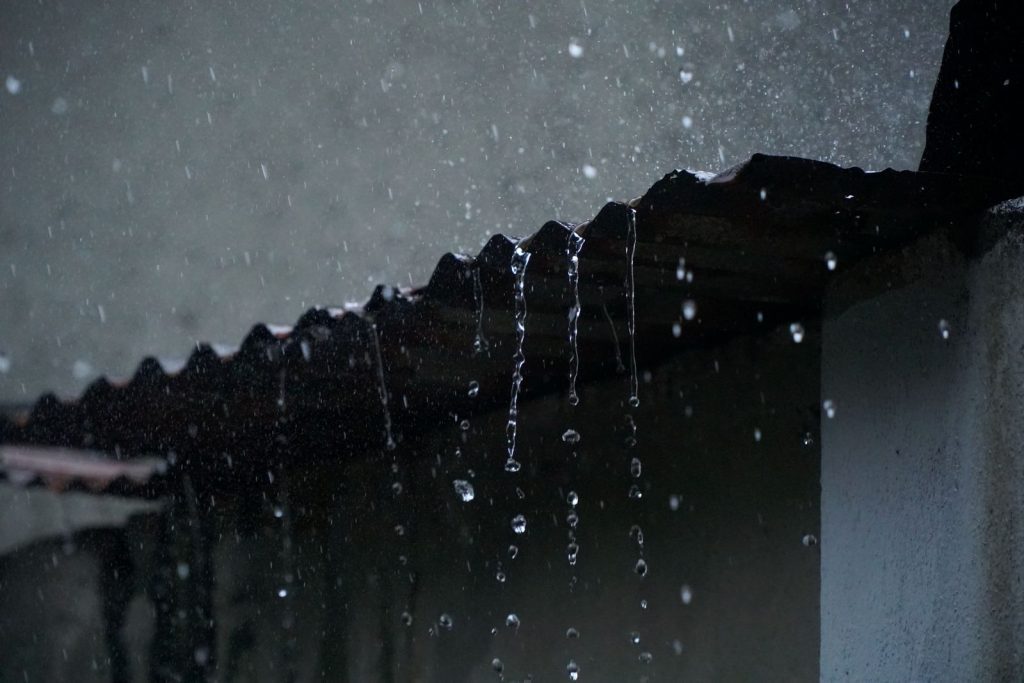
Local conditions add urgency. During monsoon season, intense downpours can dump water faster than clogged drains and scuppers can move it, creating ponding — which the National Roofing Contractors Association (NRCA) defines as water that remains on the roof 48 hours or more after rainfall ends. Standing water probes every weak seam and flashing gap, and its weight adds structural stress on top of the moisture damage.
Between storms, the high desert dishes out extreme daily temperature swings. Membranes expand in the afternoon heat and contract at night; that thermal cycling works on seams and flashings like a slow pry bar. Add intense UV exposure that gradually ages and embrittles exposed membrane surfaces, and you have a climate that actively exploits small weaknesses. A minor issue in spring can become a genuine problem by the end of monsoon season — not because anyone did anything wrong, but because the environment never stops testing the roof.
The hidden costs beyond the roof itself
The roof repair is only one line on the bill. Wet insulation forces your air conditioner to work harder through every hot month, so energy costs creep up for as long as the moisture stays trapped. Interior repairs — drywall, paint, trim, flooring — are billed by room, not by leak. And a documented history of water damage can complicate a future home sale, since buyers and inspectors treat chronic moisture as a red flag. None of these costs appear the day the stain shows up; they accumulate quietly while the leak “waits.”
What to do the moment you spot a leak
You don’t need to panic, but you do need a plan. Here’s what helps in the first hours and days:
- Protect the interior. Move furniture and electronics, lay down tarps or plastic sheeting, and set containers to catch drips. If a ceiling area is bulging with trapped water, give it a wide berth — that’s a sign of significant accumulation.
- Document everything. Photograph stains, drips, and any visible roof issues. Note when the leak started and what the weather was doing. This record helps a roofer diagnose the problem and helps you if an insurance claim becomes necessary.
- Don’t make it worse. Avoid walking on the roof more than necessary — foot traffic on a compromised membrane can enlarge the breach. And don’t just caulk over the interior stain; that treats the symptom while water keeps entering above.
- Trace, don’t guess. Resist the urge to assume the breach sits above the stain. Understanding the common causes of flat roof leaks — failed seams, flashing gaps, clogged drainage, punctures — gives you a better picture of what a roofer will be looking for.
- Get a professional assessment promptly. A roofer can trace the leak to its source, determine how far water has traveled, and tell you whether you’re looking at a localized repair or something bigger. If you need one, contact us for a leak assessment.
What a thorough leak assessment covers
Not all roof inspections are equal. A leak assessment worth paying for is systematic: the membrane surface and all seams, flashings at penetrations, curbs, and parapet walls, drainage components (drains, scuppers, gutters), areas of ponding, and any punctures or mechanical damage. Inside, it traces the visible water path to estimate how far moisture has traveled.
The outcome should be specific: where the water is entering, which materials are affected, and what the repair scope is. Sometimes that scope is a straightforward localized repair. Sometimes the assessment reveals that the leak is a symptom of a membrane at the end of its service life — which is exactly the question our repair vs. replacement guide helps you think through.
The cheapest leak is the one that never happens
The NRCA recommends that building owners have their roofs inspected at least twice a year — in spring and fall — plus after any severe weather. That’s the maintenance cadence that catches separated seams, clogged drains, and flashing gaps while they’re still small. Between inspections, keep drains and scuppers clear of debris and watch for ponding that lingers more than a couple of days after rain.
A flat roof leak can’t wait because water doesn’t wait. It spreads, saturates, rots, and compounds — quietly, out of sight, until the evidence on your ceiling forces the issue. Acting early keeps your options open and the repair as small as it can be. Acting late lets water choose the scope of the project for you.